
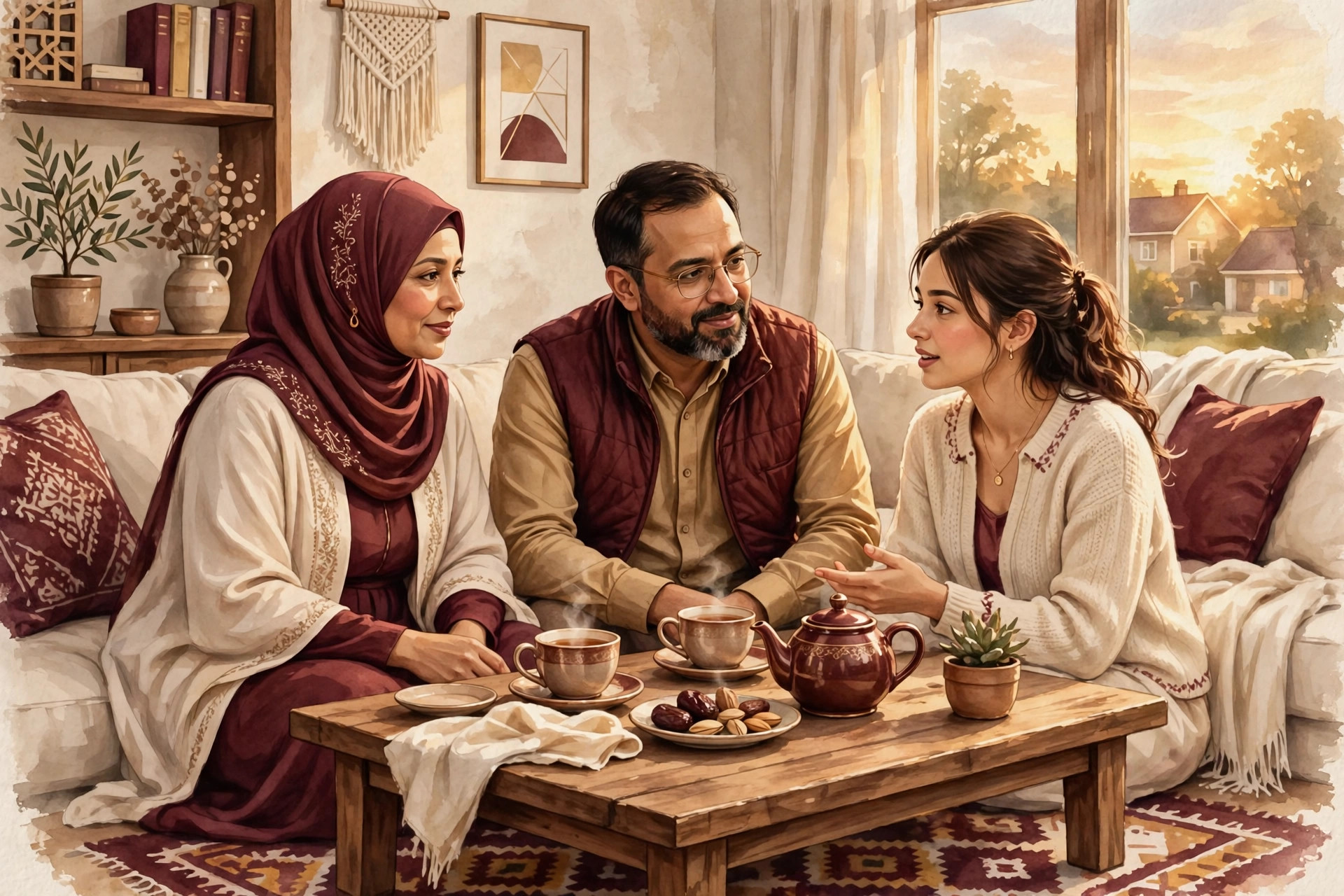
7 Pain Points Muslim Singles (and Their Parents) Face When Finding a Spouse in North America
Finding the right spouse is one of the biggest decisions of your life. For Muslim singles in North America — and for their parents — the journey comes with a set of challenges that most people outside the community never see. After countless conversations with families, here are the seven pain points we hear about most.
1. Dating apps weren’t built for us
Most mainstream dating apps are designed around casual dating and endless swiping — not around marriage, and certainly not around Islamic values. Profiles hide true intentions, conversations fizzle out, and the whole experience can feel at odds with modesty and sincerity. Many singles tell us they tried the apps, felt uncomfortable with the culture, and deleted them within weeks. The tools simply weren’t made for people seeking a halal, intentional path to marriage.
2. Parents feel shut out of the process
In our tradition, finding a spouse is a family journey, not a solo mission. Yet modern avenues often leave parents on the sidelines — hearing about developments only after decisions are already made. That doesn’t just create tension at home; it removes the wisdom, life experience, networks, and heartfelt duas of the very people who want the best for you. When parents are partners in the search instead of spectators, everyone feels more at peace.
3. The community is large but scattered
There are millions of Muslims across North America, yet they are spread across big cities, suburbs, and small towns. In your city there may be only a handful of suitable, serious matches in your age range. The masjid noticeboard, the annual convention, and word of mouth can only reach so far. Hoping to bump into the right person by chance is not a strategy — and families feel that limitation every single day.
4. Culture keeps clashing with deen
Too many families get stuck between cultural expectations — biradari, caste, ethnicity, language, and the ever-present “what will people say” — and what Islam actually prioritizes: piety and character. The Prophet ﷺ taught us clearly what to look for in a spouse, but cultural checklists keep getting in the way, quietly shrinking the pool of wonderful potential spouses for no good reason. Letting deen lead doesn’t mean abandoning culture; it means putting first things first.
5. The career-first trap, then the ticking clock
Study hard, build your career, then settle down — the plan sounds sensible until your late twenties arrive and the same family that encouraged patience suddenly starts asking why you’re not married yet. Those pressure-cooker years between 27 and 35 are very real. Anxiety makes calm, thoughtful decision-making harder, and some people end up rushing into the wrong match — or avoiding the search altogether out of exhaustion.
6. Trust is hard to verify
Fake profiles, hidden intentions, people who were never serious to begin with, and in the worst cases outright deception — the fear is justified, and stories travel fast in the community. When there is no verification and no family involvement, everyone stays guarded, conversations stay superficial, and genuinely good people miss each other. A process where identities and intentions are clear from day one changes the entire dynamic.
7. There’s no dignified middle ground
On one side: near-total separation with barely a real conversation before families push for commitment. On the other: unstructured, unsupervised mixing that many families simply aren’t comfortable with. What is missing is a dignified middle — a structured, family-involved way for two people to actually talk, ask real questions about values, goals, and expectations, and truly get to know each other before everyone gets emotionally invested.
A better way forward
Here is the hopeful part: every one of these pain points has a solution, and they all point in the same direction. When parents lead the search with sincerity, when profiles are real and intentions are clear from the start, when the process is organized instead of chaotic, and when deen — not culture, not algorithms — sets the criteria, finding a spouse becomes what it was always meant to be: hopeful, dignified, and full of barakah.
If your family is living these frustrations right now, you don’t have to navigate them alone or leave things to chance. Do it the organized way — one profile, one family, one clear intention.
Ready to begin? Add your profile today with a one-time payment of $29 for lifetime access — no monthly fees, ever.

Rana Jee is a passionate community leader, counselor, and advocate based in Mississauga, Ontario. With a strong background in family and marriage counseling, he has dedicated his life to helping individuals and families build stronger, more compassionate relationships rooted in faith and understanding.
Rana’s work extends beyond the counseling room. He actively engages in community development through educational workshops, marriage preparation sessions, and youth mentorship programs. His efforts aim to bridge generational gaps and strengthen the social fabric of the Muslim community in North America.
In addition to counseling, Rana is deeply involved in charitable work, supporting causes that uplift underserved families, newly arrived immigrants, and individuals seeking emotional and spiritual guidance. His ability to connect with people from all walks of life makes him a trusted voice in both personal and communal matters.
Whether guiding couples through marriage challenges or empowering individuals with life tools, Rana Khan remains committed to nurturing healthier, faith-centered communities—one family at a time.
