
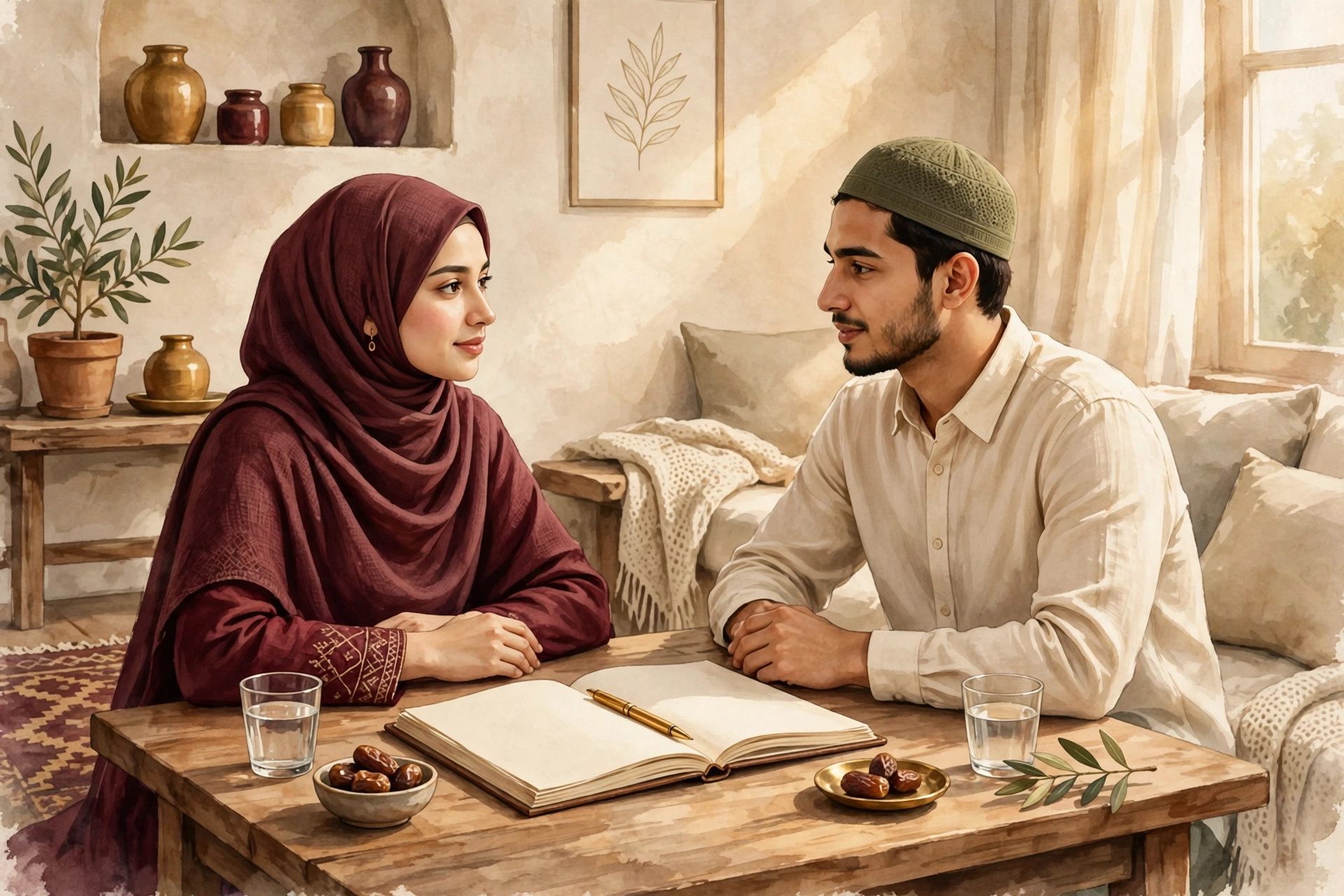
Talking About Finances Before Marriage: A Practical Guide
There is a conversation most families avoid during the rishta process — not because it doesn’t matter, but because it matters so much that nobody wants to bring it up. Money.
For many Muslim parents, raising the topic of finances with a potential family feels awkward, even disrespectful. Will they think we’re materialistic? Will the other family be offended? In some households, money is never discussed openly — so couples enter marriage having never asked the most practical questions of all.
Money disagreements are one of the most common sources of strain in any marriage, Muslim or otherwise. And the families who talk about finances early start their marriage with clarity instead of surprises.
This isn’t about being materialistic — it’s about being prepared.
Why the Conversation Feels Hard — and Why It Shouldn’t
In many South Asian, Middle Eastern, and other Muslim cultures, asking about money can feel like asking about worth.
But asking about finances is not shallow. When you ask how a young man manages his money, you are really asking about his discipline, his honesty, and his readiness to provide. When you ask how a couple plans to handle expenses, you are really asking whether they can build a life together. These are character questions, not price questions. This isn’t a negotiation between two families competing for advantage — it is two families trying to understand whether their children can build a stable, halal household together.
The Questions Worth Asking Before the Nikkah
You don’t need a spreadsheet and a finance degree. You need honest answers to a few essential questions. These can be raised by parents during family meetings, or by the couple themselves as things get serious:
Income and work. What does each person do for a living, and is the income halal and stable? Not the exact salary on day one — but an honest picture of where they stand and where they’re headed. A young man starting out is fine; a young man starting out with no plan is a different story.
Debt. This is the question almost nobody asks and almost everybody should. Student loans, credit card debt, family obligations — debt doesn’t disappear with marriage, it gets shared. Knowing about it early isn’t judgmental; it’s responsible.
Spending habits. Is one person a saver and the other a spender? Neither is wrong, but the gap needs a plan. Many scholars advise that couples talk openly about lifestyle expectations: what standard of living do they expect, and can their combined income sustain it without riba-based debt?
The mahr. The mahr is the bride’s right, and the conversation about it should be dignified, not awkward. Set it at an amount that is meaningful but not burdensome — many scholars advise against extravagant mahr amounts that delay or complicate marriage.
Who manages what. Will there be a shared budget? How will big decisions be made? Couples don’t need to agree on every detail, but they need to agree on how they’ll decide.
Support for extended family. In many of our families, supporting parents financially is expected and beautiful. Discuss it openly — how much, to whom, and with what boundaries — rather than leaving it to assumption.
For Parents: How to Raise It Without Awkwardness
Parents, you have a role here. Your son or daughter may find it hard to ask a potential spouse about debt or spending habits directly — it can feel unromantic or intrusive. But parents asking parents is normal in our culture, and it carries less sting.
A few gentle ways to open the door:
- “We want our children to start their marriage on solid ground. Can we talk about how they’d manage their household practically?”
- “We believe in being open about these things early. Is there anything about finances your family would like to discuss?”
The Islamic Framework: Provision Without Extravagance
Islam gives us a balanced framework for all of this. A husband’s duty to provide (nafaqah) is a serious responsibility — many scholars emphasize that it is an obligation tied to his means, not to luxury. At the same time, the Quran warns against both miserliness and extravagance. The goal is sufficiency with dignity, generosity without waste.
A young man who earns modestly but manages well, avoids riba, and takes his duty of provision seriously may be a far better prospect than a high earner drowning in interest-based debt and lifestyle inflation.
Red Flags and Green Flags
A few things to watch for — gently, without judgment, but with clear eyes:
Green flags: Openness about income and debt. A realistic budget mindset. Avoidance of riba where possible. Respect for the mahr as a right, not a bargaining chip. Willingness to discuss financial plans for the future, including children and supporting parents.
Red flags: Evasiveness or anger when money comes up. Hidden debt discovered late. A lifestyle funded by credit cards and loans. Pressure to agree to an extravagant mahr — or, just as telling, dismissiveness about the mahr altogether. Insistence that “we’ll figure it out later” about every practical question.
What matters is honesty and trajectory, not perfection.
Starting Marriage With Clarity
Treat the money conversation as part of preparing for marriage, not as a test anyone has to pass. The goal isn’t a perfect financial picture. Most young couples start with modest means, and that is completely fine. Our deen has never asked for wealth as a condition of marriage — it asks for character, responsibility, and trust in Allah’s provision.
Talk about the money. Do it early, do it kindly, do it honestly. Your children will thank you — maybe not today, but in the quiet years of a marriage built on clarity instead of surprises.
Searching for a spouse the dignified, organized way? MuslimMatchByParents.com connects serious families with real profiles — parent-led, deen-first, and built for how our community actually finds matches. Lifetime access for a $29 one-time payment. No monthly fees, ever.

