
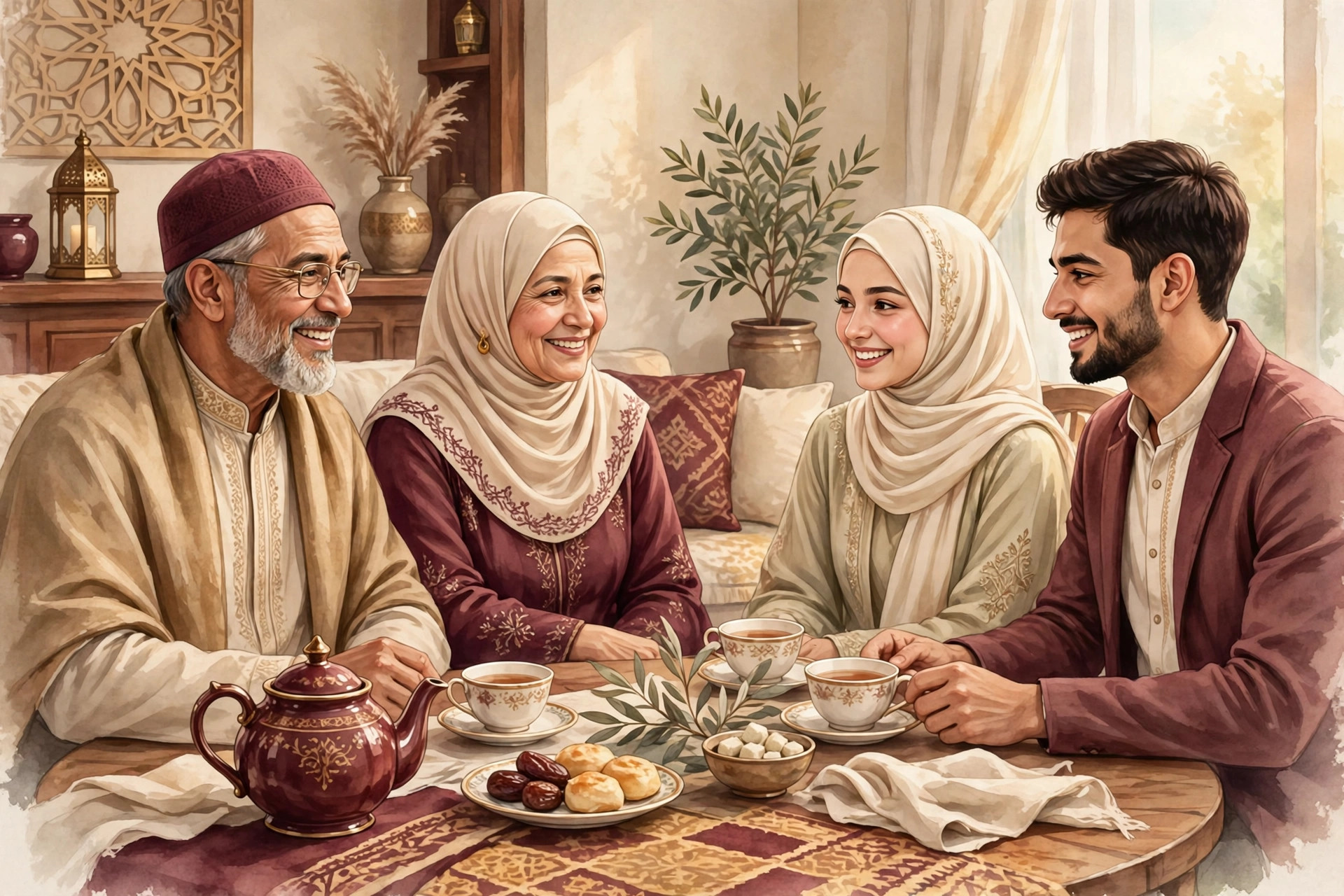
In-Laws: Building a Healthy Relationship from Day One
When a marriage begins, it is never just two people coming together — it is two families learning to share one story. For many Muslim families, the relationship with in-laws can feel like one of the most uncertain parts of the rishta journey. There are the stories we’ve all heard: the overbearing mother-in-law, the distant father-in-law, the newlywed who feels like an outsider in her own home. But there is another side that deserves just as much attention — the countless families where in-laws become some of the closest, most cherished people in a person’s life.
The difference between these two outcomes is rarely luck. It is usually built — deliberately, gently, and from day one. Here is how parents and couples can set the foundation for an in-law relationship that strengthens the marriage rather than strains it.
Start Before the Nikkah: Set the Tone Early
The in-law relationship does not begin at the wedding. It begins in the way both families treat each other during the rishta process. When parents speak respectfully about the other family, when they make room for warmth instead of suspicion, the young couple absorbs that posture. Conversely, when negotiations feel like battles and every conversation is scored like points, the newlyweds inherit the tension.
Parents can set a powerful tone simply by being gracious hosts and guests. Receive the other family with generosity. Speak well of them in their absence. Small acts of consideration — remembering a dietary preference, asking after an elderly parent, offering flexibility on timing — send a message that will outlast the wedding itself: we see you as family, not as the other side.
Respect Is the Currency That Never Devalues
In many of our cultures, the younger generation — especially the daughter-in-law — is expected to earn her place. There is wisdom in patience and humility, but the scholars remind us that dignity is not something a person has to audition for. A new spouse entering the family deserves the same adab (courtesy) we would extend to any guest, and then some.
This goes both ways. Young couples should approach their in-laws with the best assumptions, offer help before being asked, and remember that criticism of one’s spouse in front of their parents poisons the well. Parents-in-law, in turn, should remember that their child’s spouse chose their family too — and treat that choice as an honor, not a threat.
Boundaries Are Kindness, Not Disrespect
One of the most common sources of friction is the misunderstanding of boundaries. Many young couples worry that asking for space — a quiet weekend at home, a decision made privately as a couple — will be read as rejection. Many parents worry that a child’s boundary means they are losing them.
It helps enormously when the expectations are discussed openly and kindly, early on. How often will you visit? Who decides how the new household is run? What role will grandparents play in raising children? These conversations are far easier to have before resentment builds. Many scholars advise that clarity and gentleness together are better than silent endurance that eventually boils over. A boundary stated with love is not a wall — it is a door that lets everyone in comfortably.
Include, Don’t Inspect
New in-laws often feel watched. Every meal, every habit, every small preference becomes a data point under examination. This inspection — however well-intentioned — creates anxiety and distance.
Inclusion is the opposite posture. Ask the new family member what they like to eat rather than judging what they cook. Invite their opinions on small family decisions. Learn about their family and their background with genuine curiosity. When someone feels included rather than inspected, they open up naturally — and it is in that openness that real love grows.
Handle the Hard Moments with Dignity
No family is perfect, and disagreements will come. The couples and families that thrive are not the ones that avoid conflict but the ones that handle it with dignity. A few principles that help:
- Never triangulate. If you have a concern about your mother-in-law, discuss it with your spouse, not with your siblings, cousins, or social media.
- Let the son or daughter be the bridge. It is usually wiser for the child of the parents to raise sensitive issues with their own parents, rather than putting the spouse in that position.
- Forgive quickly and publicly. Families that can say “it’s behind us” — and mean it — build a trust that survives the hard years.
- Keep the elders’ hearts. Many scholars advise that maintaining ties with one’s parents and in-laws, even through difficulty, is among the most rewarded acts. Patience with family is not weakness; it is worship.
A Word for Parents: Your Child’s Marriage Is Theirs
Perhaps the hardest wisdom of all is for the parents reading this. You raised your child with love, sacrifice, and dua — and now you must share them. It is natural to feel a sense of loss. But the healthiest in-law relationships come from parents who see their role shifting from manager to mentor: available, supportive, and generous with space.
Trust what you built. You raised a person of character — now trust their character, and trust the spouse they chose. The families that flourish are the ones where parents give their blessing with open hands, not a leash.
Closing
A good in-law relationship is not found — it is built, day by day, with small kindnesses, honest conversations, and the steady intention to see the best in one another. Every marriage deserves that foundation, and every family is capable of laying it.
If you are at the beginning of this journey — still searching for the right family to join yours — an organized, parent-led process makes all the difference. At MuslimMatchByParents.com, families connect with dignity and clarity, with no endless swiping and no guesswork. Lifetime access is just $29, one time — never any monthly fees — so you can take the time your family needs to find the right match.
May Allah bless your family with warmth, understanding, and the kind of love that grows stronger with every year. Ameen.

